
After being edged out by sectors like marketing and consulting during the summer placements at the Indian Institute of Management-Ahmedabad (IIM-A) in 2008, finance companies overcame the slowdown blues to once again emerge as the hot favourite among the 2009-11 batch of post graduate programme (PGP) this year.

Corporate bond issuances fell by around 22 per cent in August, despite easing yields as issuers delayed raising funds awaiting the US Federal Reserve to start cutting interest rates from this month. Corporates and financial institutions expect yields to fall further and borrowing costs to become cheaper, said market participants. The US Fed is widely expected to cut interest rates by 25 bps in the 17-18 September meeting, marking the start of a downward interest rate cycle.

From the 30 Sensex firms, Larsen & Toubro, Reliance Industries, Axis Bank, Asian Paints, Tata Motors, Bajaj Finance, Maruti, Bajaj Finserv, Kotak Mahindra Bank, Titan, Adani Ports and HDFC Bank were the major laggards. JSW Steel emerged as the only gainer.
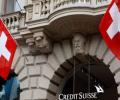
Funds parked by Indian individuals and firms in Swiss banks, including through India-based branches and other financial institutions, jumped to a 14-year-high of 3.83 billion Swiss francs (over Rs 30,500 crore) in 2021 on a sharp surge in holdings via securities and similar instruments while customer deposits rose as well, annual data from Switzerland's central bank showed on Thursday.

McKinsey, RBS postpone placements by three to six months
Of the total 381 summer placement offers at the Indian Institute of Management Ahmedabad, 24.4 per cent roles were offered by financial and banking services.

The Sri Lankan government has appointed an advisory committee comprising eminent economic and fiscal experts to provide guidance on addressing the current debt crisis and engaging with the International Monetary Fund (IMF) and other lenders as the country struggles to combat the unprecedented shortage of foreign reserves.

Tata Steel, Bajaj Finance, Mahindra & Mahindra, JSW Steel, NTPC, Adani Ports, Bajaj Finserv and Larsen & Toubro were also among the laggards. However, Power Grid, HCL Technologies, Infosys, Tech Mahindra, Tata Consultancy Services and ICICI Bank were among the gainers.

It said banks' asset quality will deteriorate across the corporate, small and medium enterprises and retail segments, leading to pressure on profitability and capital.

'I am optimistic about the Budget because of the fiscal discipline the government has committed to.'
The number of companies invited sees a 50 per cent jump over last year.

The United Kingdom extracted USD 64.82 trillion from India over a century of colonialism between 1765 and 1900 and USD 33.8 trillion of this went to the richest 10 per cent -- enough money to carpet London in notes of 50 British pound almost four times over.

The B-school also witnessed new roles in the domain.

Employees across segments, including those involved in specialised jobs such as technology, compliance and risk management, have started leaving the bank fold in hordes, observes Tamal Bandyopadhyay.

Sir Osborne Smith was the first governor of the Reserve Bank, serving from April 1, 1935, to June 30, 1937.
Postings to places at an altitude above 1,000 metres but less than 1,500 metres, between 1,500 and 3,000 metres, and above 3,000 metres entail different rates of allowances -- the higher the location, the bigger the allowance, reveals Tamal Bandyopadhyay.

From the outcome of the general elections and then Union Budget to tepid corporate earnings in the September 2024 quarter (Q2-FY25), sticky inflation and Reserve Bank of India's stance on interest rates, extreme weather conditions, Indian stock markets have braved it all in calendar year 2024.

Moody's Ratings on Tuesday said India's growing water shortage can disrupt farm and industry sectors and is detrimental to the credit health of the sovereign as rising food inflation and decline in income may spark social unrest. It said decreases in water supply can disrupt agricultural production and industrial operations, resulting in inflation in food prices and hence can be detrimental to credit health of sectors that heavily consume water, such as coal power generators and steel-makers.

Benchmark equity indices Sensex and Nifty ended lower on Monday after hitting their all-time high levels in early trade amid selling in blue-chip IT stocks and HDFC Bank. After breaching the 77,000-mark during the early trade, the 30-share BSE Sensex came under selling pressure at the fag-end of the session and ended 203.28 points or 0.27 per cent lower at 76,490.08. During the day, the benchmark jumped 385.68 points or 0.50 per cent to hit a new record of 77,079.04.
Equity benchmark Sensex rallied 515 points on Thursday to reclaim the 59,000-level, propelled by heavy buying in IT, banking and financial stocks amid sustained foreign fund inflows. The 30-share BSE index ended 515.31 points or 0.88 per cent higher at 59,332.60. Similarly, the broader NSE Nifty gained 124.25 points or 124.25 per cent to close at 17,659.

'We face the risk of remaining a low-income country for a very long time unless something changes in the next few years.' 'Instead of constantly talking about becoming a developed economy, we need to start fixing the problems of the economy one by one.' 'There is so much potential, and we are squandering away the opportunity.'

A delegation of high-level executives from US public pension funds (non-profit and government sectors) is visiting India next week to assess and familiarise themselves with the investment opportunities in the country. These executives belong to various American states and cumulatively represent $1.8 trillion in assets under management (AUM) invested across the US and global markets. The United States (US) mission to India, which includes its embassy and consulates and the Department of Treasury, along with India's Ministry of Finance and the National Investment and Infrastructure Fund (NIIF), is hosting the delegation.

Equity benchmarks Sensex and Nifty ended over 1 per cent higher on Friday, helped by heavy buying in Infosys and banking stocks amid a rally in global stock markets. The 30-share BSE Sensex jumped 684.64 points or 1.20 per cent to settle at 57,919.97. During the day, it rallied 1,199.79 points or 2.09 per cent to 58,435.12.

After the finance minister directed public sector banks to join the account aggregator (AA) ecosystem, 5-6 major ones, including State Bank of India (SBI) and Bank of Baroda are expected to go live by July-end. Sahmati, an industry alliance for the AA ecosystem, has been working with PSU banks to get them onboarded for quite some time now. So far, Union Bank of India and Punjab National Bank (PNB) have gone live on the AA ecosystem. While Union Bank has been live for a while, PNB went live earlier this month.

The average time lag between the date of occurrence of a fraud and its detection is 23 months; for large frauds (Rs 100 crore and above), it was 57 months.
Benchmark equity indices Sensex and Nifty slumped over 1 per cent on Friday, tracking a weak trend in global markets and fresh foreign fund outflows. Falling for the third day running, the 30-share BSE Sensex tumbled 1,017.23 points or 1.24 per cent to settle at 81,183.93.

Believe it or not, the regulator is even stretching its arm to identify stressed borrowers and gauge the 'distance to default' as a measure of a particular bank's fragility, reveals Tamal Bandyopadhyay.

There was no smooth surge in middle class prosperity for foreign businesses to tap into because of the Indian economy was mismanaged, argues Debashis Basu.

From the Sensex basket, Larsen & Toubro, Bajaj Finance, Axis Bank, State Bank of India, UltraTech Cement, Wipro, ICICI Bank, Infosys, HCL Technologies and Asian Paints were the major gainers. NTPC, JSW Steel and HDFC Bank were the laggards.

Gautam Adani, India's second-richest man, and seven others including his nephew Sagar have been charged with paying bribes to unidentified officials of state governments in Andhra Pradesh and Odisha to buy expensive solar power, potentially earning more than $2 billion profit over 20 years.

The government on Monday appointed three eminent economists Ashima Goyal, Jayanth R Varma and Shankanka Bhide as members of the rate-setting Monetary Policy Committee of the RBI

The World Bank has approved loans totalling $1.75 billion (about Rs 13,834.54 crore) to fund India's PM Ayushman Bharat scheme and private investment to boost the economic growth. Of the total loan, $1 billion will go towards the health sector, while the rest $750 million will be in the form of development policy loan (DPL) to fill the financing gaps through private sector investment in the economy. The World Bank Board of Executive Directors approved two complementary loans of $500 million each to support and enhance India's health sector.

Nestle, State Bank of India, Power Grid, Tata Steel, Larsen & Toubro and Mahindra & Mahindra were the other major gainers. In contrast, Tech Mahindra, Axis Bank and Reliance Industries were the laggards.

'The FSIB will conduct interviews for the SBI chairman position on May 21-22 as the tenure of the current chairman Dinesh Kumar Khara is scheduled to end by August.'

From the Sensex basket, Kotak Mahindra Bank jumped 5 per cent after the company reported a 25 per cent growth in its March quarter net profit at Rs 5,302 crore, limited by a drop in the core income due to narrow interest margins. Tata Consultancy Services, Hindustan Unilever, Mahindra & Mahindra, Sun Pharma, Tech Mahindra and IndusInd Bank were among the other major gainers. Titan tanked 7 per cent after its March quarter earnings failed to cheer investors.

Most adult Indians should have access to bank deposits, credit and remittance facilities as well as insurance and mutual fund products in the next decade, and technology will play a big role in this transformation, says Tamal Bandyopadhyay.

Having successfully executed the merger with parent HDFC, HDFC Bank's managing director and chief executive Sashidhar Jagdishan on Saturday said the country's largest lender aims to double every four years. In a letter to the over 4,000 employees from HDFC who joined the bank's rolls on Saturday, Jagdishan said the future is bright, and the work on realising the potential of the merger starts now. "The runway for financial services and mortgage, which are so underserved and under penetrated, is going to be very large. HDFC Bank - the combined entity - with a large and growing distribution and customer franchise, more than adequate capital, healthy asset quality and profitability, will be best positioned to capture growth.
Benchmark equity indices Sensex and Nifty rebounded on Wednesday, propelled by bargain hunting in index majors Reliance Industries, ITC and SBI amid a largely firm trend in global equities. In a highly volatile trade, the 30-share BSE Sensex rebounded 89.64 points or 0.12 per cent to settle at 72,101.69. During the day, it jumped 390.62 points or 0.54 per cent to 72,402.67.

'We are confident that over the next few years the government will strike a fine balance between populist measures and growth, and manage coalition partners well.'
 © 2026 Rediff.com - Advertise with us - Disclaimer - Privacy Policy - Sitemap - Feedback - About us - Terms of use - Grievances